What Causes Dentures To Break And How Can You Prevent It?
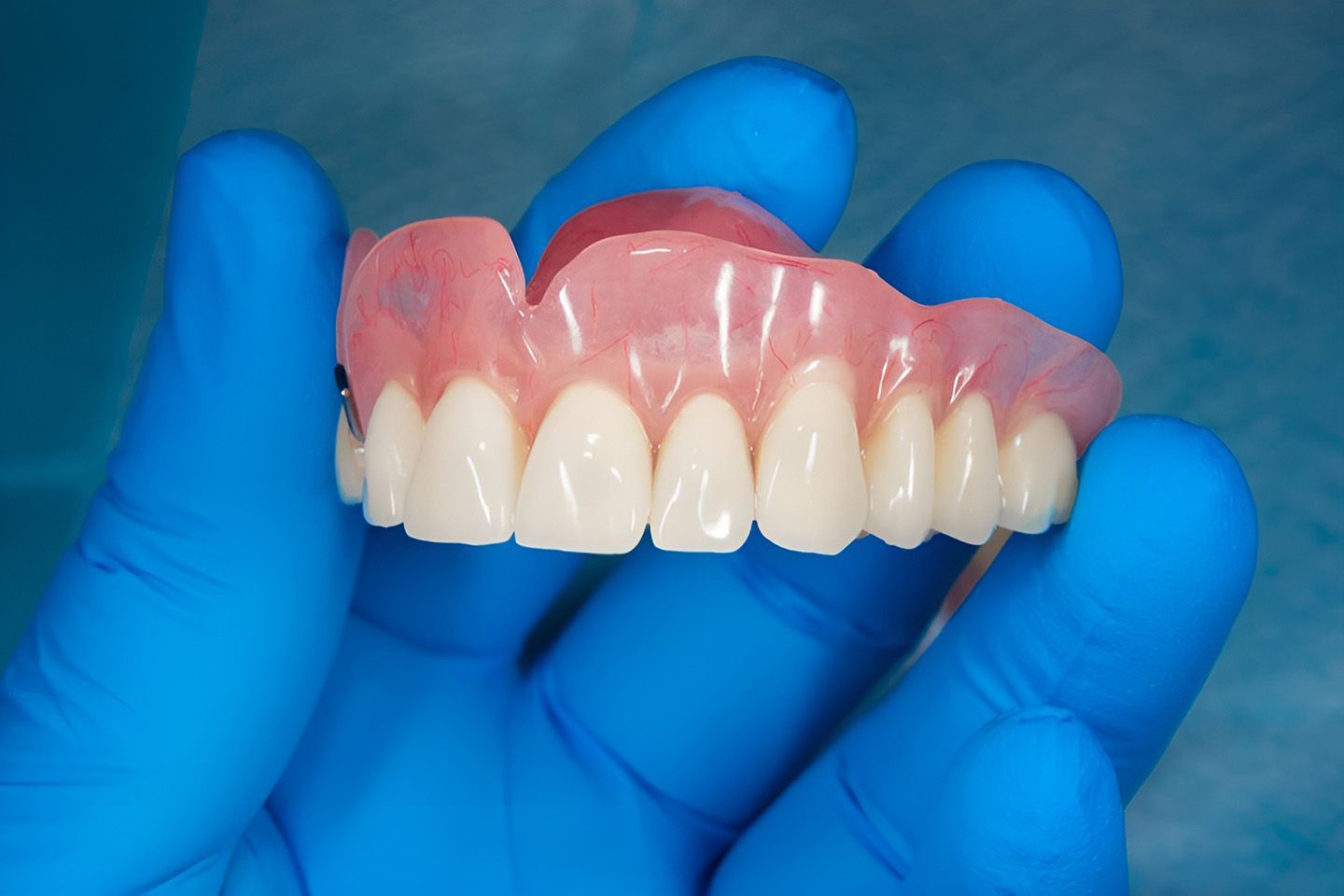
Most dentures don't break because someone was careless. They break because the fit changed. As gum contours and the underlying ridge shift after tooth loss, the denture stops seating evenly, pressure concentrates on one point of the acrylic base, and a hairline stress crack eventually splits under ordinary chewing. If you're looking for a denture clinic on the Gold Coast because your denture just cracked, chipped or came loose, here's what actually happened and how to stop it happening again.
The Short Answer: Why Dentures Break (and What to Do in the First Hour)
Dentures break for one of three reasons: a fit problem that's built up gradually as your gums have changed shape, everyday wear and tear on the acrylic base and clasps, or a sudden impact, most often a drop onto a hard bathroom surface. In the first hour after a break, the most useful thing you can do is also the simplest: stop wearing it. Don't try to wear a cracked or sharp-edged denture and don't attempt a home fix. Wrap the pieces carefully and call to have it assessed for repair or relining.
Why Did My Denture Break When I Wasn't Doing Anything Unusual?
This is the question we hear most, and it makes sense. The denture that snapped while you were eating toast feels like it came from nowhere, but dentures rarely fail out of the blue. What's usually happened is alveolar ridge resorption: the bone and gum tissue under the denture slowly remodel after tooth loss, which is a normal, gradual process.
As that happens, a denture that once sat flush starts to rock slightly or bear weight unevenly, and over months that uneven load creates a stress fracture in the acrylic base long before you ever feel or see it. The toast wasn't the cause. It was just the moment the crack finally gave way.
The Six Most Common Causes of Denture Damage
- Fit changes from ridge resorption. As gum contours shift, pressure concentrates unevenly across the base, and that uneven loading is the single biggest contributor to fractures over time.
- Dropping the denture, usually in the bathroom. A fall onto a hard sink or tiled floor is the most common single cause of a fractured base.
- Chipped or lost denture teeth. Individual teeth can chip or dislodge from the base through wear or an accidental knock.
- Loose or broken clasps on a partial denture. The metal clasps that grip your natural teeth can fatigue and loosen or snap with repeated use.
- Abrasive cleaning habits. Regular toothpaste is too abrasive for denture acrylic. A soft-bristled brush and a non-abrasive denture cleaner are the safer choice.
- Letting the denture dry out. Dentures need to stay moist to hold their shape, which is why soaking overnight matters. A denture allowed to dry out can warp and throw off the fit.
Can a Broken Denture Be Repaired, or Do I Need a New One?
It depends on the type and extent of the damage, and that's genuinely something that needs to be assessed in person rather than guessed at over the phone. A clean fracture through the base, a chipped or missing denture tooth or a loose clasp on a partial are all things that can typically be repaired. Repair speed depends on how extensive the damage is and what materials are on hand, but same-day or next-day turnaround is common for straightforward repairs.
Where a denture has broken repeatedly in the same spot, or the fit has drifted a long way from where your gums now sit, a repair might hold for a while but won't address the underlying cause. That's when relining or remaking becomes the more honest recommendation. A fractured base, a chipped tooth or a broken clasp all qualify for emergency denture repairs rather than a wait-and-see approach.
Why You Should Never Glue a Denture Back Together at Home
It's a tempting shortcut when you're facing a day or two without your teeth, but household glues aren't designed for the mouth, aren't food-safe and can't restore the precise fit a denture relies on. A misaligned home repair often sits slightly wrong against the gum, causing new sore spots, and because the material isn't biocompatible, it can irritate the gum tissue too. It can also make a professional repair harder, since some adhesives can't be fully removed from the acrylic. If the base has cracked, book in with a
denture clinic on the Gold Coast before you try wearing it again.
How to Prevent It Happening Again: Daily Care That Actually Matters
A short daily routine does more to prevent breakage than anything else:
- Handle over a folded towel or a basin of water. Since drops are the most common cause of fractures, cleaning your denture over a soft surface removes the single biggest risk.
- Rinse after meals to clear food debris before it sits against the acrylic or your gums.
- Brush with a soft-bristled brush and a non-abrasive denture cleaner, not regular toothpaste, which is too abrasive for the acrylic surface.
- Soak overnight so the denture stays moist and holds its shape rather than drying out and warping.
- Avoid hard and sticky foods that place concentrated force on one point of the base or pull at the clasps.
- Book periodic review appointments so fit changes are caught before they turn into an emergency.
When a Reline Is the Real Fix
Because most fractures start as a fit problem rather than a strength problem, denture relining is often the step that actually prevents the next break, rather than just patching the last one. Relining adjusts the fitting surface of the denture to match your current gum contours, restoring even pressure across the base. It won't fix a badly chipped tooth or a broken clasp (those are repair issues), but for a denture that keeps fracturing in the same place, a reline addresses the cause rather than the symptom.
Repair vs reline vs remake, in plain terms:
| What It Addresses | What It Doesn't Fix | Typical Visits | |
|---|---|---|---|
| Repair | A specific fracture, chip or broken clasp | An underlying fit problem that caused the break | Often one visit |
| Reline | A denture that no longer fits due to gum changes | Physical damage like a fracture or missing tooth | Usually one to two visits |
| Remake | A denture that's reached the end of what repair or reline can fix | Not applicable | Several visits over a few weeks |
Which category you fall into is something a dental prosthetist needs to see in person to determine. It isn't something we can promise or rule out over the phone, and coverage for emergency repairs varies by provider, so it's worth checking with your own insurer beforehand too.
FAQs
If your denture has cracked, chipped or come loose, don't wear it and don't reach for the glue. As a denture clinic on the Gold Coast trusted by locals across Miami, Broadbeach and Kingscliff, we can assess the damage and let you know honestly whether it needs a repair, a reline or a remake. Call (07) 5576 3244 to book an assessment.